
After the pink city we head to the tranquillity of the desert, with its cool nights and large camels.
Although Jaisalmer is known for its desert safaris, we decide to drive to Bikaner: This is where the desert begins and we hope for fewer tourists and less commerce. And that's exactly what happens - we are alone in the camp, nobody wants to sell us a carpet or scarf and we really enjoy this little break.
Off into the desert
It is a seven-hour drive from Fort Amber before we arrive at Camp Rajputana near Bikaner.
We finally reach a small side road in the dark and this is where the adventure begins: First, our driver Prakash makes an intensive phone call with our host to vlarify the final way. He then drives a little further into the dark until a man on a motorcycle is waiting for us. We follow him over sandy tracks. The biker says goodbye in a village and we trail on alone. Following the signs of Camp Rajputana we had to cross few gates before we finally reach the camp.
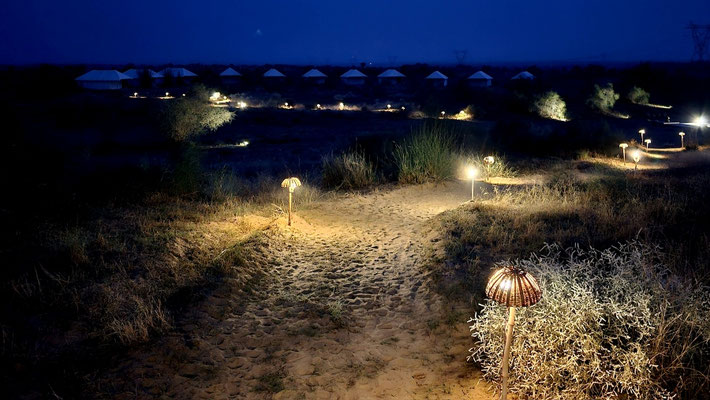
A jeep is waiting for us at the entrance to the desert camp, into which we transfer our luggage, which is driven directly to our tents. We walk along an illuminated sandy path, smell the fresh air and follow the sounds of soft harmonium music and singing.
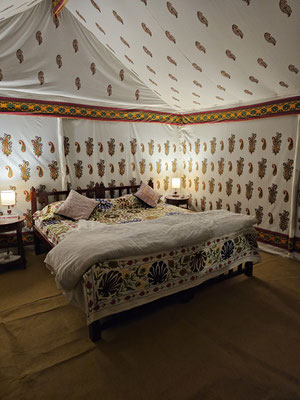
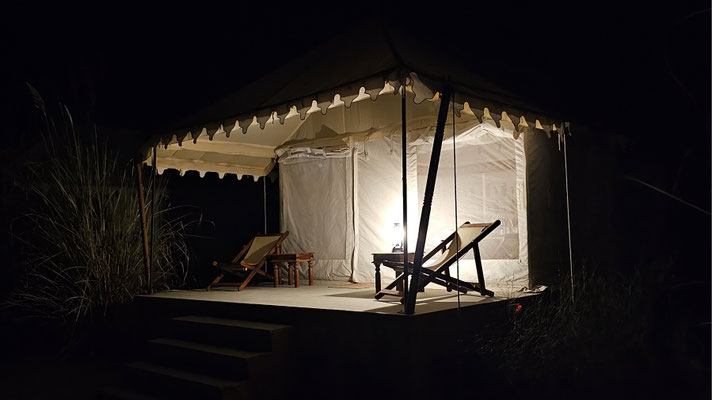
We move into our tents and are then served a wonderful dinner on a terrace while two musicians play their melodies. Tired, we then sink into bed in our luxury tents. As darkness falls, so does the coolness of the night and we snuggle up comfortably in the thick blankets.
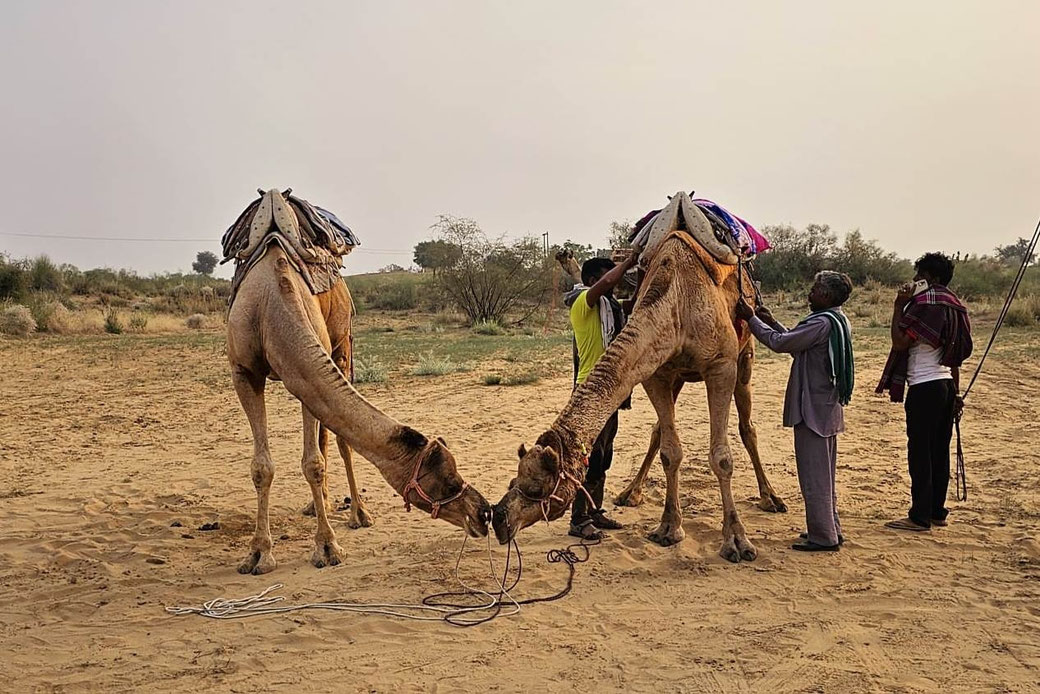
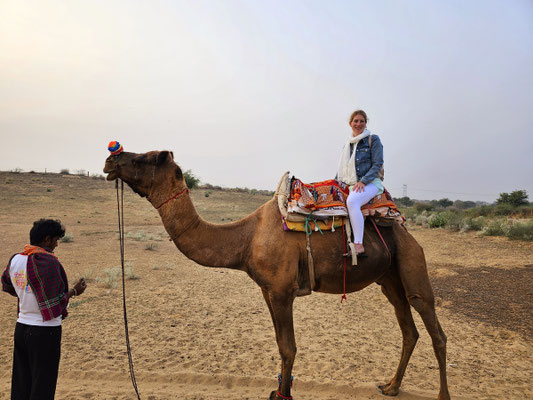
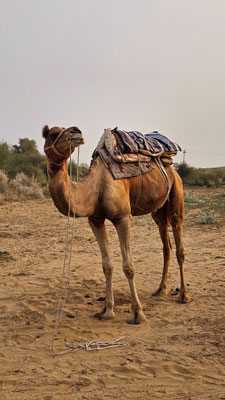
The next day doesn't start with coffee, but with a camel ride. Four camels await us. They seem a little arrogant, with their noses up in the air and looking down at us through their long eyelashes.
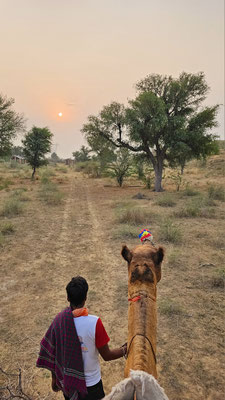
At 6:30 a.m. we get on their backs and ride through the desert for an hour. Getting up is a particularly rocky affair. Unlike a horse, the camel first stands up with its hind legs and you are thrown forward. Only then does it stretch its front legs and you return to an upright position.
The ride through the semi-desert is quite comfortable, one camel after the other swings through the landscape with us. Here we also become aware of the height of the camels. They are over two meters high and from here we have an excellent view and see not only many birds and a deer, but also two desert foxes.


Let's do a jeep safari
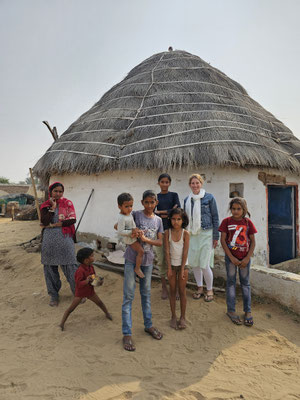
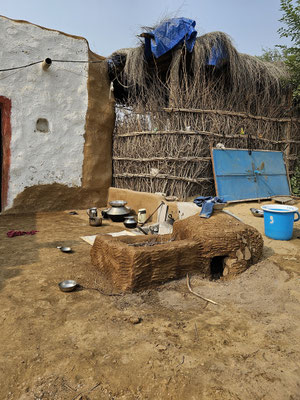
After the camel ride, breakfast awaits us on the terrace, followed by the jeep safari. We first drive to a small village and get to know how the houses are built. We receive a friendly welcome from the villagers, who wave and shout everywhere. We greet them cheerfully and feel very welcome.
Most of the people in the village work as farmers and grow peanuts and cotton, among other things. Farming in the desert came as something of a surprise to us, but a few years ago the government invested in irrigation here. This makes the soil more fertile and the sand doesn't fly so much during the sandstorms in summer.
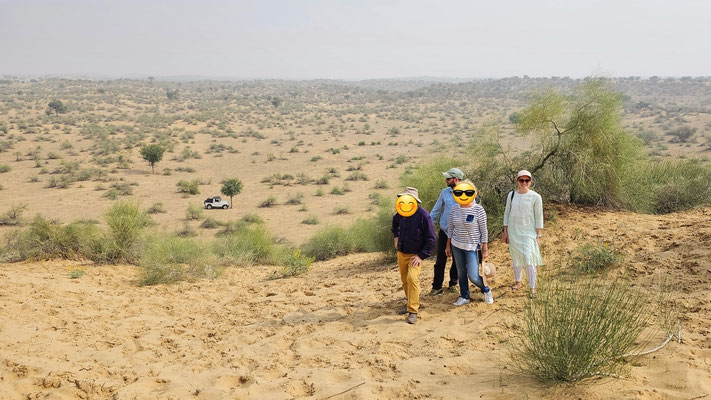
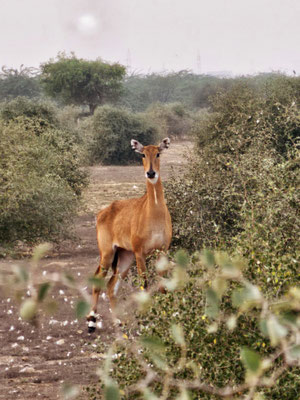
After visiting the village, we head into the desert, although Bikaner is still more of a semi-desert. The sand dunes are always overgrown with sparse grasses and bushes and under the scorching rays of the sun we climb the dunes and spot Blue Bulls, a kind of deer.
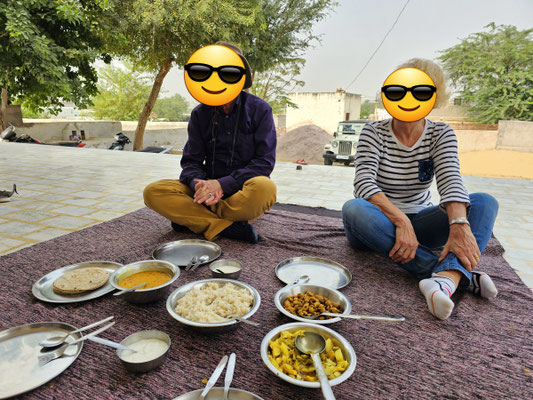
Lunch we have in the village, where a family cooks an excellent meal for us. We rest in their garden before driving on to a camel research center, the largest in Asia. There we treat ourselves to a kulfi made from camel's milk. Kulfi is Indian ice cream made from milk (in this case camel's milk), flavored with cardamom, turmeric, nuts and other spices. I love kulfi and eat it at every opportunity.
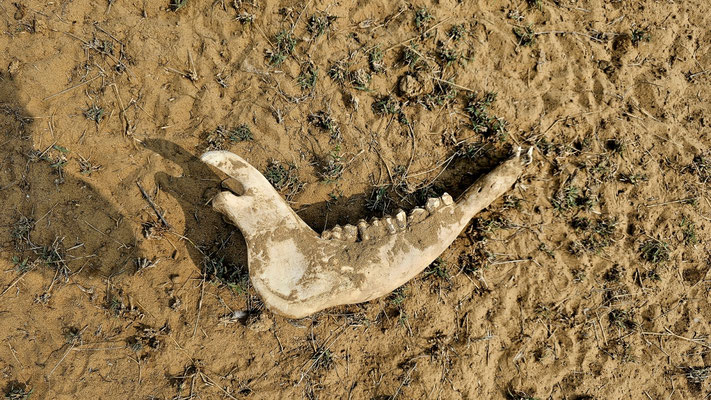
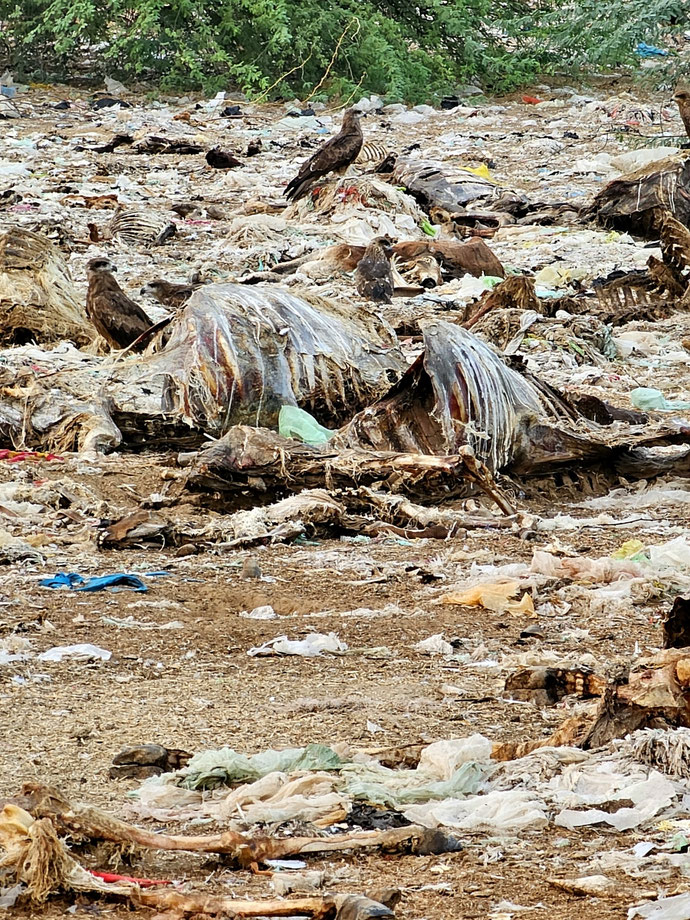
At sunset, we drive to a morbid site for birdwatching. The dead animals - mainly camels and cattle - around the city of Bikaner are dumped here, left for biocomposting: People skin the animals to make leather, animals eat the meat.
So numerous dogs and carrion birds have settled around the dumping site and quickly consume the dead bodies. We had expected it to stink like hell, but that wasn't the case at all. And so we were not only able to admire the sunset in this morbid environment, but also many different birds, including eagles and vultures.
The plastic that is visible on the picture below is not there because people use this place also as garbage disposal. It comes out of the stomachs of the cattle, they it it during their lifetime and after they rotten, this is what remains as non recyclable.
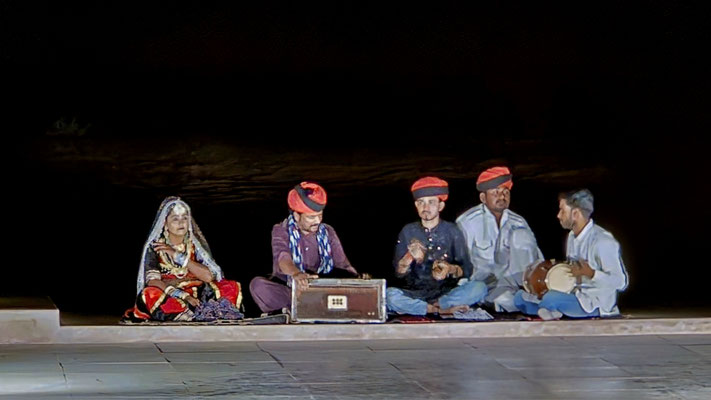
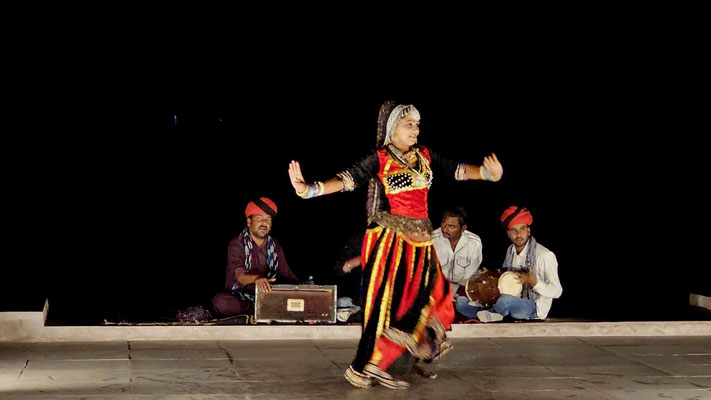
We then drive back to the camp. Today there is not only music but also dancing. A dancer in a beautiful costume performs traditional dances. I am asked to join in twice, and of course I don't miss out. She shows me the steps and we dance together to the sounds of the harmonium.
Did you like our second stop in Rajastan? Then follow us to our next destination: Jaisalmer - The golden city. There, we explore a historic fort that is still inhabited.

Kommentar schreiben
karin (Donnerstag, 02 Mai 2024 23:08)
waou � this looks amazing! I enjoyed reading every articles you wrote! we are planning to travel to India in July and I wanted to organise this glamping in the Thar in the same place as you. Do you have any email contact for a reservation? thank you so much!